Set in the midst of a Victorian neighborhood in midtown Sacramento is an unassuming coffee house run by the legendary punk band Seven Seconds’ front man, Kevin Seconds, and his wife Allison. The duo started their business together on J Street in 2001, naming it True Love Coffee. They had live music almost every night, and stayed open late on the weekends in order to serve post-drinking waffles. The business temporarily closed, but they opened the doors to the current location on K Street in November 2006.
A multi-roomed, low-lit atmosphere with red, yellow and purple walls gives the True Love a cozy home vibe. There is outdoor seating in the front and back, complete with heaters for the cooler weather. The tables inside are two-seaters, which add to the coziness of the interior. There are strings of lights draped around various columns to help with the ambiance. This would be a great place to meet for a coffee date.
There are a wide variety of hot drinks to choose from. The normal coffee drinks like white mochas and cappuccinos are just right. You can even get your drink of choice made with soymilk and they taste delicious. They also serve hot teas like blood-orange tea as well as iced tea. The True love knows how to make a good tasting hot drink.
When it comes to food though, the True Love is in poor shape. Among various Panini sandwiches and salads, the menu also includes Tabouli with cucumber, tomatoes and pesto, which there is nothing special about. It tastes vegan, but at least the pesto isn’t too strong. There is also a humus plate with pita bread. The sun-dried humus is flavorful, but only slightly better than what is available at the grocery store. You can get a falafel plate with spicy humus. It is about the same as the falafel from Hana’s Deli on K Street. It is good, but nothing to write home about.
If vegan is not your style then there are also dishes for the cheese-lovers. You could get a plate of nachos, which look like something you would get at the school cafeteria. Canned nacho cheese is smothered over round corn chips and it is topped with sour cream and olives to add color. They offer black beans instead of refried, which helps with the overall lack of flavor, but it is mediocre at best. As Michael Althouse says, “They are competent nachos, but there is nothing special about them.”
They also have a burrito plate that comes with chips and salsa. The same round corn chips are served along side what tastes like Pace brand salsa. The burrito is made with melted cheese and heavy refried beans that taste like they have been cooked just below room temperature in a saucepan for far too long. The burrito is grilled on a Panini grill for some reason, which does not help the flavor, but instead makes it taste stale. Be warned of the burrito plate, it will sit in your stomach for days like a bag of wet sand.
The only good food item at the True Love is the bagels. They serve Noah’s bagels, which are by far the best bagels around.
Overall the True Love is perfect if you want to have a delicious drink while you play checkers or Connect Four with your friends (something available to patrons free of charge), but the food resembles what is served at a bar, mediocre and just part of the menu so that when customers get hungry, they won’t leave to find food somewhere else.
The True Love is at 2315 K Street In Midtown Sacramento. The phone number is (916) 448-LOVE and the web address is myspace.com/truelovesacto. Hours are Sunday – Thursday 11:00 AM – Midnight. Friday and Saturday 11:00 AM– 1:00 AM
Tuesday, October 30, 2007

Thursday, October 18, 2007
Bishop's Pumpkin Farm

Halloween is a tradition that has lasted many generations. The celebration originated as a Pagan holiday by the Celts in Ireland called Samhain and was brought to Northern America in the 19th century by Irish and Scottish immigrants. It is now celebrated around the world with slight adjustments to each region’s culture and religion.
In addition to wearing costumes, trick-or-treating, bobbing for apples, and carving pumpkins, visiting pumpkin farms has become a tradition in the Untied States.
Bishops Pumpkin Farm in Wheatland California is one of those farms. Bishops is just under an hour from Sacramento and well worth the trip. The farm includes all the excitement that a Halloween junky is looking for, and it is family friendly as well.
Bishops has acres of pumpkins ranging from hand-sized to as much as 200 pounds. They specialize in Winter Luxury pumpkins, which are great for pies. The fields are so big that they have included free hayrides to help cart you around, especially if you have to carry a 200 pounder.

They also have a three-acre corn maze complete with a maze challenge that helps you navigate through the field. The stalks are at least eight feet tall so you have no idea where you are, or if you’ve already been at that spot before. If you complete the challenge, you win a prize.
Another adventure at Bishops is Coyote Mountain Mines. Coyote Mountain has a 30-foot and a 50-foot slide and a stream below where you can pan for marbles. This adventure is more exciting for the kids, but if you are young at heart, you will love to plummet 50 feet to the bottom. Plus, you get to keep the marbles that you find!
You can also ride the BPF Railroad while you are there. The train takes you on a tour of the entire farm, including the apple and walnut orchards and right past the horses. The train ride is a great way to relax and rest up after seeing the pig races and the chicken show.

The best part of the trip to Bishops is the food. This year, the farm has built “Pigadeli Square.” Here, you can munch on pizza, corndogs, hamburgers, BBQ tri-tip sandwiches and delicious icecream. Mrs. B.’s Bakery offers baked goods that Martha Stewart would envy. The apple-pumpkin muffin is the mort popular item, but make sure you take home a pumpkin pie. Bishops is the only farm where you can get a from-scratch pie made with pumpkins fresh from the farm.
Bishop’s Pumpkin Farm is open every day at 9 a.m. and closes at 6 p.m. on weekdays, 7 p.m. on Friday and Saturday. Admission is free, but it costs $8 to park on the weekends, and the maze, train, and mountain each cost $3.50. If you plan on participating in all three adventures, then you can get a fun pack for $8.
Wednesday, October 10, 2007
The Future is Here.
Andy Warhol once made a prediction that in the future everyone would have fifteen minutes of fame. The future has arrived in the form of youtube. There are many other streaming video websites on the Internet that follow the same format, some of them are much better, like megavideo or tvlinks, but none have been so pervasive as the google-owned youtube network.
A perfect example of the “ten minutes of fame” theory is the self-directed video by Gary Brolsma lip-syncing to the song, Dragostea din tei by the German band O-Zone. If you type “singing guy” into youtube’s search engine, this video is ranked number one out of 19,000 singing guys. Brolsma’s low-quality, homemade video caught the attention of so many fans that hundreds of parodies have been made in response. It became so popular that a new phrase was coined, the “Numa Numa” dance. Brolsma’s fame prompted him to make a higher quality follow-up video called New Numa.
Amateur directors have received their mark of fame on youtube as well. Millions of songs have been re-imagined by digital camera owners with delusions of grandeur. The Tony award-winning Broadway play, Avenue Q includes the song, “The Internet is for Porn.” This clever song about the “real” use of the Internet has been parodied by a number of directors, but the best one is the World Of Warcraft parody. It comes from a website called warcraftmovies.com, but the youtube version has been added by over 200 fans. It is well done and hilarious to see characters from the video game doing their own Numa Numa dancing to the song.
Celebrities have also had their hands in the proverbial cookie jar of youtube. Will Ferrell, co-creator of the video website funnyordie.com stars in the Adam McKay directed short film called, “The Landlord.” Ferrell had an uncomfortable confrontation with his drunken landlady played by two-year-old baby, Pearl. The original short has since been removed for copyright reasons, but the parodies go on and on. Clark Duke and Michael Sera wrote and stared in the TV shorts series, “ClarkandMichael.com,” a CBS experiment with internet-only show releases. The ten-minute shorts are delicious morsels of comic genius that can all be found on youtube, as well as some post-show revisits and some great stand-up work by the duo.
Before youtube gained so much popularity, you could watch a whole episode of your favorite TV show. You had to watch it in ten-minute increments, but it was worth it to see funny BBC sitcoms that hadn’t made it to the United States in any other way. The latent fame of shows like “The IT Crowd” has since prompted the BBC to make them available on DVD to us.
By far the best reason to visit youtube is the music videos. There is almost no stone unturned when it comes to the millions of bands posted. The live performances are some of the most rare glimpses at bands that you may never see play live. Lipcream is a Japanese hardcore punk band that started in 1983. You can find videos of this band playing live back in the mid to late 80s. Obscure bands can be found on youtube as well, including your friend’s brother’s band that you saw play at the local bar last week. If you just want to watch funny music videos, White and Nerdy by Weird Al Yankovic is a hit. Yacht Rock is a series of shorts that makes fun of easy-listening musicians such as Kenny Loggins and Michael McDonald.
Youtube is one of the Internet’s greatest achievements, allowing amateurs and professionals to share the limelight in a vast sea of time-wasting ten-minute clips. So you had better get busy if you want your fifteen minutes of fame (or ten).
Thursday, October 4, 2007
The Life of an Outdoorsman is the Life for Me

He stands six feet and two inches tall, has a thick white beard which obscures most of his face, and wears a lucky bear claw around his neck at all times. Tom Stienstra epitomizes the great outdoors, something he has been writing about for more than a quarter of a century. His passion and enthusiasm for wildlife has led to a career as an outdoors columnist for the San Francisco Chronicle, a job as the host of a TV show, 12 books on outdoor adventuring, and almost 100 awards for his various writings.
Tom loves the outdoors. He spends more time enjoying nature and wildlife than he does actually working. He has hiked more than 25,000 miles and visited almost 100 lakes. He has boated across most of the California coastline and has caught world-record fish. Recently he has averaged 180 adventures per year and has no plans to slow down. His life is nature.
When he was nearly 20 years old, Tom tried out for the Oakland A’s. He had been playing baseball for most of his life. He was really good, but according to the A’s coach, not good enough. His dreams were crushed. Tom became a sports writer for a local newspaper at the time, but something about it wasn’t quite right. He was beginning to feel that he had more passion for baseball than the players did.
“I was covering the Oakland Raiders and, I remember that moment where there were 60,000 fans in need of a hike, and 22 guys out there in need of a rest.”
He didn’t want to be on the sidelines of his writing career anymore. He wanted to take place in the action that he was writing about. He wanted to be a wildlife adventurer, so he quit his job at the paper after the season was over. He grabbed his backpack, his guitar and his dog and hit the road. Soon, he was selling his articles to the San Francisco Examiner, and after a rough road to the top, he finally got his gig. The previous outdoors columnist for the San Francisco Chronicle, Ed Neal, was retiring and they offered the job to Tom.
“People say, ‘How did you ever create a life like you’ve got?’ And the answer is, I refuse to do anything else.”

He has spent almost every day of his life since then working to capture the majesty of the wildlife experience. His love and devotion to nature, especially in Northern California, shows through with every word he writes. He says that he truly feels that his life is blessed because he gets to spend so much of his time reveling in the outdoors.
“Being in the outdoors is the most humbling thing there is, and to be in the greatness of it, we’re just lucky to be surrounded by it and to take in all the five senses that are out there.”
In 2005, Tom was offered a job as a TV host for San Francisco’s CBS station for his own outdoor adventure show called, The Great Outdoors with Tom Stienstra. The show did so well that it was picked up by other CBS affiliates, including Sacramento’s CW-31, where it faired even better for ratings. In 2007, the show has over 600,00 viewers and plays every week on three different CBS-affiliated channels.

Today, Tom is doing exactly what he wants to do. He lives everyday to the fullest and never takes advantage of his time. He is always planning adventures in order to take in the wildlife, even if it’s just for a few hours.
“Always have a place to go to as a refuge where you can find what I call ‘A power of place’ and all of the other stuff that happens along the way- the fish, the wildlife, the weather-that is the unexpected and what makes it a fortune hunt.”
Monday, October 1, 2007
Technology Has Done it Again
In the early 1970s every single movie theater in Sacramento County employed union projectionists. Now, in 2007, there is one theater left using the union. There are only seven projectionists in Local 50. The Crest Theatre employs them all. Union-paid projectionists are a dying breed, and they will never repopulate the movie industry.
In the early days of the movie theater development, projection work was a trade skill. Projectionists had to know a lot about the mechanics of their work. Film was run on reel-to-reel until the mid 1970s. That meant they had to constantly be ready to transfer film from one reel to another. Every 20 minutes the film had to be switched from one machine to another as the reels ran out. Burn marks in the film signaled the projectionist to switch from machine number one to number two, and if done correctly, it went unnoticed by the viewing audience. After the machine switched over, the projectionist set up the unused machine to run the next reel.
By the early 1980s, movie projector technology progressed, allowing the projectionist to only have to make one change over in a film. Movies were still run on reel-to-reel machines though, and projectionists still had jobs.
Technology became the downfall of the industry as the advent of the automated machine was developed in the mid 1980s. That machine was the death toll for the union projectionist. They no longer had to remain in the booth to watch the film and change the reels. Film was “built” onto a platter big enough to hold the entire film and then automatically sent to the projector. Automated machines were also set up to dim and raise the lighting as well as lift the curtain of the movie screen. This allowed the projectionist to just push a button to start the movie, and then go out for lunch for a few hours.
Major corporations like Century Theaters and United Artists caught on that projectionists’ jobs were less demanding and by the 1990s they took union projectionists off the payroll and hired minimum-wage employees that were trained by the union workers they replaced. Making the profit margin for big businesses grow even wider.
The unfortunate result of losing union projectionists is that film work is no longer treated as an important element of the movie viewing experience. During the union’s heyday, projectionists had to pass a test, proving they were worthy of the trade. They cared about the film, making sure each reel was spliced correctly, and that there were no scratches on the print. Today, moviegoers are subject to dim lighting and scratches on the film, missing seconds in the movie due to poor splicing, and even films that start in the middle because the projectionist didn’t know how to properly build the film onto the platter.
The future of projectionists is even worse. In California there are approximately 100 theaters employing union projectionists, most of them on a part-time basis. Only major metropolises like Los Angeles and New York have any significant numbers among them. As technology continues to progress, all projectionists, not just union-paid ones, will become obsolete.
In the early days of the movie theater development, projection work was a trade skill. Projectionists had to know a lot about the mechanics of their work. Film was run on reel-to-reel until the mid 1970s. That meant they had to constantly be ready to transfer film from one reel to another. Every 20 minutes the film had to be switched from one machine to another as the reels ran out. Burn marks in the film signaled the projectionist to switch from machine number one to number two, and if done correctly, it went unnoticed by the viewing audience. After the machine switched over, the projectionist set up the unused machine to run the next reel.
By the early 1980s, movie projector technology progressed, allowing the projectionist to only have to make one change over in a film. Movies were still run on reel-to-reel machines though, and projectionists still had jobs.
Technology became the downfall of the industry as the advent of the automated machine was developed in the mid 1980s. That machine was the death toll for the union projectionist. They no longer had to remain in the booth to watch the film and change the reels. Film was “built” onto a platter big enough to hold the entire film and then automatically sent to the projector. Automated machines were also set up to dim and raise the lighting as well as lift the curtain of the movie screen. This allowed the projectionist to just push a button to start the movie, and then go out for lunch for a few hours.
Major corporations like Century Theaters and United Artists caught on that projectionists’ jobs were less demanding and by the 1990s they took union projectionists off the payroll and hired minimum-wage employees that were trained by the union workers they replaced. Making the profit margin for big businesses grow even wider.
The unfortunate result of losing union projectionists is that film work is no longer treated as an important element of the movie viewing experience. During the union’s heyday, projectionists had to pass a test, proving they were worthy of the trade. They cared about the film, making sure each reel was spliced correctly, and that there were no scratches on the print. Today, moviegoers are subject to dim lighting and scratches on the film, missing seconds in the movie due to poor splicing, and even films that start in the middle because the projectionist didn’t know how to properly build the film onto the platter.
The future of projectionists is even worse. In California there are approximately 100 theaters employing union projectionists, most of them on a part-time basis. Only major metropolises like Los Angeles and New York have any significant numbers among them. As technology continues to progress, all projectionists, not just union-paid ones, will become obsolete.
Tuesday, September 25, 2007
Do You Even Know What's In That?

How often do you go out to eat? Statistically, you probably eat out four or more times per week. Do you know how many calories are in the food you eat at a restaurant? Most likely you don't. That is unless it comes off of the "eating light" section of the menu. Did you know that a chicken Caesar salad at the Macaroni Grill has more fat than a barbecue chicken pizza? Neither did 90 percent of people questioned in a Field Poll survey conducted in March 2007.
According to the Field Poll, Californians have no idea what they are eating when they go to a restaurant. The telephone survey asked four multiple choice questions regarding fat, salt, and calorie content of food items on the menu at certain chain restaurants. Not on single person answered all four of them correctly.
Lack of knowledge of the content of food is a huge factor in obesity. While it is important to recognize that proper diet and exercise is the weapon to combat obesity, it should also be noted that restaurants in general, and fast food specifically have a obligation to communities to give them tools that will help them make informed decision about what they eat.

California is fast becoming an obese society and a major part of the problem is the convenience of eating out. As time goes on, we see more convenient food being packaged for our consumption. With a growing amount of the population existing in two-income families, there is less time to cook from scratch with fresh ingredients. Going out to eat has become the easiest, and sometimes fastest way to get dinner for the family. If parents were given the nutritional value of the food they ordered, they might make different choices on what to feed their children. Most people read the label at the grocery store in order to check the health factor of their food. In 1990, the Nutrition Labeling and Education Act was passed, requiring nutrition labels on food. People have gotten so used the reading labels that it is hard to remember a time when you didn't know how many servings were in a family-size bag of potato chips. Since then, the public has become significantly more aware of ingredients that are bad for you. For instance, trans fat, or partially hydrogenated soybean oil. Why shouldn't we have the right to nutritional labeling at restaurants as well?
The American Heart Association has teamed up with the California Center for Public Health Advocacy as well as the American Cancer society to sponsor a bill that would make it mandatory for restaurants to post nutrition information on their menus. Senate Bill 120 has been passed by the Legislature and is headed to the Governor's desk for approval.
The California Restaurant Association is not happy about the bill's passing. President and CEO, Jot Condie says that having nutrition labels on menus will not have any affect on obesity rates. When you read the Field Poll statistics and see how many people are not just uninformed, but misinformed about food content in restaurants, it seems hard to believe that the restaurant industry has nothing to do with obesity.
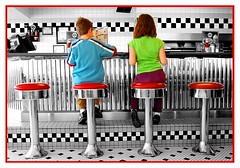
This new bill would only effect chain restaurants that have more than 14 locations in California, so the burden of cost is nothing compared to the affect of the future health of our children and ourselves. In fact, cost is the only thing that the California Restaurant Association is complaining about. Of course, they are not going to admit to their concerns that if Californians saw how unhealthy their meal was, they would start to demand better alternatives. Just like they did with grocery store labels.
Senate Bill 120 is nothing but good news for Californians by allowing them to make better informed decisions on what they eat at a restaurants, and nothing but bad news for the multi-billion dollar mega corporations, by forcing them to make new menus. Does anyone have a problem with that?
Sunday, September 23, 2007
3:10 to Yuma Misses the Train
Set in the dry climate of 19th century Arizona, 3:10 to Yuma is the story of a down-and-out farmer on the verge of losing his land due to shady antics from a rival land owner that he owes money to. The protagonist of the story, Dan Evans is a self-loathing family man who spends the whole movie attempting to prove to his son William, played by child star Logan Lerman, that he can be the hero that the boy reads about in pulp novels. Ben Wade, the thieving, murdering, womanizing bandit that's causing such a stir appears to have a soft side. He has charisma, he has a sense of morality, and he's an artist. Evans is hired by a railroad company to escort Wade to Contention where he will be placed on the 3:10 train to Yuma prison. Through a series of unfortunate events, including Wade's uncanny ability to suddenly have the mobility to kill some of his captors, Evans ends up being the only escort left to get the prisoner on the train. While in Contention, Wade's posse catches up and finds ways to make life very hard for Evans while waiting for the train. This is the part of the film that is supposed to show how each of the lead characters are deeper than you thought, but they just seem to leave a lot of unanswered questions.
Christian Bale convincingly played the part of Dan Evans. Bale has the incredible ability to seamlessly slink into any character thrown at him without the viewer questioning how he could possibly go from super-villain (American Psycho) to super-hero (Batman) and then to the Wild West. Bale will never suffer the dreaded issue of typecasting in Hollywood.
Russell Crow holds his own with his rendition of Ben Wade. He doesn't blend into the scenery quite as well, but Crow is certainly believable as the "jerk with a heart-of-gold." After all, that's the role he was born to play. Crow has the ability to have a twinkle in his eye while he blows the brains out of his cohorts in crime.
The minor characters were played well by an all-star cast including Peter Fonda as the weathered hired-hand, Byron McElroy and Alan Tudyk as the comic-relief, Doc Potter. Ben Foster outshined every one with his portrait of Ben Wade's overly enthusiastic right-hand man. Even young Lerner shows how torn the boy is about the love he has and contempt he feels for his father's ineffectual life-style.
Aside from being well cast, this movie left much to be desired. There was a definite homage to old, western style movie making in the way that it was a heavily character driven movie with a lot of grit and realistic backdrops. However, there was something about this film that always reminded you that this was just a movie. The characters themselves were one-dimensional, even though the story attempted to make them multi-layered. Many times throughout the film, it was easy to think, "Now, why would he do something like that?" The dialog seemed hollow and forced. The plot constantly fell into unbelievable scenarios by trying to convince you that the good guy and the bad guy were destined to be friends, even at the cost of long-standing loyalties from their pasts. The character development seemed heavy-handed, you were constantly being hit over the head with how 'good' the bad guy was. It was also glaringly obvious that Crow was very uncomfortable on a horse.
Although the acting of the entire cast was far above average, there is only so much one can do to make tasty omelets out of bad eggs.
Christian Bale convincingly played the part of Dan Evans. Bale has the incredible ability to seamlessly slink into any character thrown at him without the viewer questioning how he could possibly go from super-villain (American Psycho) to super-hero (Batman) and then to the Wild West. Bale will never suffer the dreaded issue of typecasting in Hollywood.
Russell Crow holds his own with his rendition of Ben Wade. He doesn't blend into the scenery quite as well, but Crow is certainly believable as the "jerk with a heart-of-gold." After all, that's the role he was born to play. Crow has the ability to have a twinkle in his eye while he blows the brains out of his cohorts in crime.
The minor characters were played well by an all-star cast including Peter Fonda as the weathered hired-hand, Byron McElroy and Alan Tudyk as the comic-relief, Doc Potter. Ben Foster outshined every one with his portrait of Ben Wade's overly enthusiastic right-hand man. Even young Lerner shows how torn the boy is about the love he has and contempt he feels for his father's ineffectual life-style.
Aside from being well cast, this movie left much to be desired. There was a definite homage to old, western style movie making in the way that it was a heavily character driven movie with a lot of grit and realistic backdrops. However, there was something about this film that always reminded you that this was just a movie. The characters themselves were one-dimensional, even though the story attempted to make them multi-layered. Many times throughout the film, it was easy to think, "Now, why would he do something like that?" The dialog seemed hollow and forced. The plot constantly fell into unbelievable scenarios by trying to convince you that the good guy and the bad guy were destined to be friends, even at the cost of long-standing loyalties from their pasts. The character development seemed heavy-handed, you were constantly being hit over the head with how 'good' the bad guy was. It was also glaringly obvious that Crow was very uncomfortable on a horse.
Although the acting of the entire cast was far above average, there is only so much one can do to make tasty omelets out of bad eggs.
Subscribe to:
Posts (Atom)